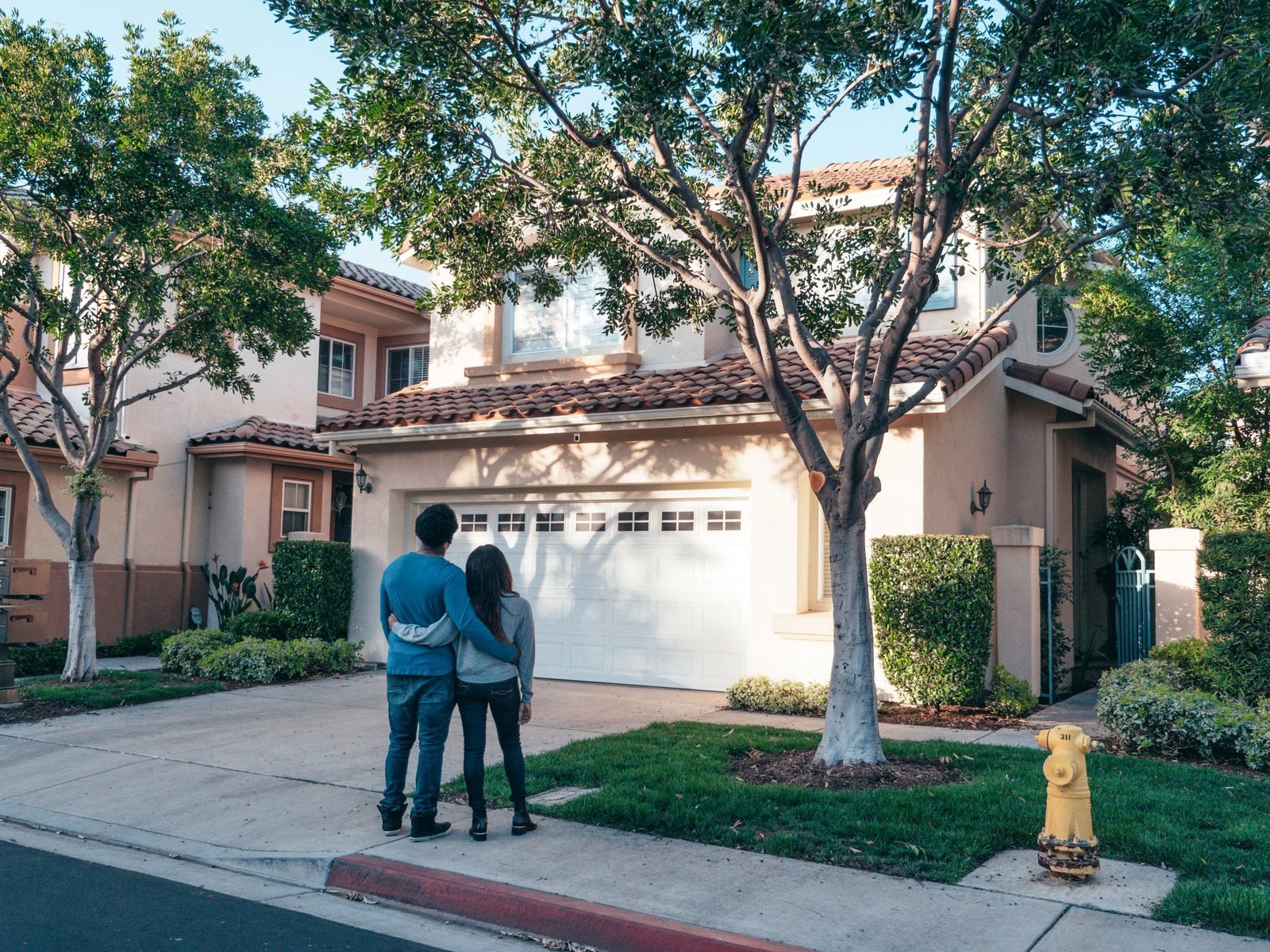
I'm turning 28 this year, and I want to buy my first home soon. That means I'm about to go through the whole first-time buyer process myself, and with all the information out there, I can see how it feels daunting. As a licensed REALTOR®, I decided to jump into the deep end and learn as much as I could, not just so I can explain it as an agent, but so I can help you understand it in a way that's easy to follow but still detailed. So instead of a generic buyer's checklist, this is the list I'm actually building for myself: the 15 things I think matter most for someone buying their first home in Orange County right now.
1. You probably don't need 20% down
Twenty percent isn't a legal requirement, it's just the threshold where you avoid paying private mortgage insurance (PMI) on a conventional loan. In reality, conventional loans commonly go as low as 3% down, FHA loans allow 3.5%, and eligible veterans can buy with 0% down through a VA loan. California also runs its own assistance programs through CalHFA that can help cover part of your down payment or closing costs.
Read the full breakdown of down payment options in Orange County →
2. California has programs that may help with upfront costs
California runs its own homebuyer assistance programs through CalHFA that can help eligible buyers with a down payment or closing costs. Programs, funding, and eligibility change, so rather than quoting numbers here that might be outdated by the time you read this, I'll point you to the current details.
Read more about down payment options in Orange County → or check CalHFA directly.
3. Get pre-approved before you start touring
Pre-approval is a lender's written confirmation of what you can actually borrow, based on a real look at your income, debt, and credit, not a guess. It's different from "pre-qualification," which is a quick, unverified estimate. In a market where good listings can get multiple offers, sellers and their agents want to see a real pre-approval letter before they take you seriously, so this should happen before you fall in love with a house, not after.
How mortgage pre-approval works in Orange County →
4. Your credit may not need to be as high as you think
FHA loans allow credit scores as low as 580 with 3.5% down, and some lenders go down to 500 with a larger down payment. Conventional loans commonly look for around 620, though it isn't a hard universal cutoff anymore. Credit is one input among several, income, debt-to-income ratio, and cash reserves matter too, so a score that feels "not great" doesn't automatically mean you can't qualify. Talk to a lender before ruling yourself out.
What credit score you actually need to buy in Orange County →
5. Know what you actually need saved: it's more than just the down payment
Your down payment is only one piece. You'll also need to cover closing costs, an earnest money deposit (which typically counts toward your down payment, not on top of it), moving costs, and ideally some reserves left over after closing. The short version: budget for more than just the down payment percentage when you're setting a savings target.
How much you should actually have saved before buying →
6. Closing costs are separate from your down payment
Closing costs cover things like lender fees, title insurance, escrow fees, and county recording and transfer taxes, typically a few percent of the purchase price, on top of your down payment, not part of it. Your lender will give you a formal estimate (a Loan Estimate) early in the process so this isn't a surprise at the closing table.
7. Earnest money isn't your down payment either
Earnest money is a deposit you put down when your offer is accepted, showing the seller you're serious. It's held in escrow, and at closing it's typically credited toward your down payment and closing costs, it's not an extra cost on top. The terms for getting it back (or not) if a deal falls apart are spelled out in your purchase contract, which is exactly why you want an agent walking you through what you're signing.
8. Never skip the home inspection
A general home inspection checks the roof, HVAC system, plumbing, electrical, and structural condition of the home, the expensive stuff that isn't obvious on a walkthrough. One detail worth knowing: California doesn't license home inspectors the way many other states do, so it's worth checking that whoever you hire belongs to a recognized professional association (like CREIA or ASHI) rather than assuming a license guarantees quality.
9. Student loans don't automatically disqualify you
Carrying student debt doesn't rule out homeownership. Lenders evaluate your full debt-to-income picture, not just the fact that a student loan exists, plenty of buyers with student debt qualify every year. If you've been assuming you're not ready because of this, it's worth an actual conversation with a lender before you count yourself out.
10. Condo, townhome, or house: think about OC HOA life first
A lot of Orange County's more affordable entry points are condos and townhomes, and most of them come with an HOA, which means monthly dues, rules, and sometimes financing quirks (lenders look closely at a condo project's HOA finances before approving a loan on it). One newer wrinkle: starting January 2026, California law (SB 410) requires HOAs to disclose their most recent inspection reports for balconies and other exterior elevated elements, worth asking about on any condo or townhome that has them. None of that is a reason to avoid them, but it's worth factoring the HOA dues into your real monthly payment and understanding what you're agreeing to before you fall in love with a unit.
11. How your agent gets paid has changed recently: ask about it upfront
Since 2024, buyers sign a written agreement with their agent before touring homes, under both a national settlement and California's own AB 2992 (effective January 2025), and how that agent gets paid is something you discuss and agree to directly rather than assuming it's automatically covered by the seller. One detail worth knowing: these agreements can't run longer than 90 days at a time, so you're never locked into representation indefinitely without renewing it. This isn't a red flag, it's just the current standard, but you should feel comfortable asking any agent, including me, to explain exactly how they're compensated before you start working together.
12. Know your real monthly payment, not just the sale price
Your actual monthly payment is principal, interest, property tax, homeowners insurance, and HOA dues if applicable, not just the mortgage on the sale price. In Orange County specifically, watch for Mello-Roos, a special property tax that funds infrastructure in many newer master-planned communities (areas like parts of Rancho Mission Viejo, the Great Park in Irvine, and Ladera Ranch, among others). It can add a meaningful amount to your annual tax bill, and it's easy to miss if you're only looking at the listed price.
13. Get to know the city, not just the house
Orange County isn't one market, commute times, school boundaries, and day-to-day feel change block by block, let alone city by city. Spend time in a neighborhood at different times of day before you commit, not just during a Saturday open house. I put together local guides to different OC communities if you want a starting point.
14. Be ready before you find "the one"
Well-priced homes in good condition in Orange County can move quickly, sometimes drawing multiple offers within days. That's not a reason to rush a decision, it's a reason to have your pre-approval, financing, and priorities locked in before you're seriously touring, so you can actually act when the right house shows up.
15. Your agent should be working for you, not just unlocking doors
A good buyer's agent is doing a lot you don't see: reviewing comps so you don't overpay, flagging issues in disclosures, negotiating repairs after inspection, and telling you when a house isn't right for you even if that's not what you want to hear. That's the standard I hold myself to when representing buyers.